
Particulate matter · PM2.5 & PM10
Fine airborne particles associated with dust, smoke, cooking and outdoor air infiltration. Particle readings can help identify patterns and potential sources.
Indoor environmental concerns can be difficult to evaluate by sight alone. We start with your concerns, the building conditions and an appropriate assessment plan.
We spend much of our time indoors, yet air quality concerns are not always obvious. An indoor air quality assessment can help you better understand conditions in your home, identify potential contributors to discomfort and make informed decisions about ventilation, moisture control and appropriate next steps.
Our goal is useful information and greater confidence in your home environment—not a promise that any single assessment can detect every airborne concern.
We consider the building, ventilation and occupant concerns first, then recommend measurements appropriate to the scope. Not every assessment includes every pollutant listed below.
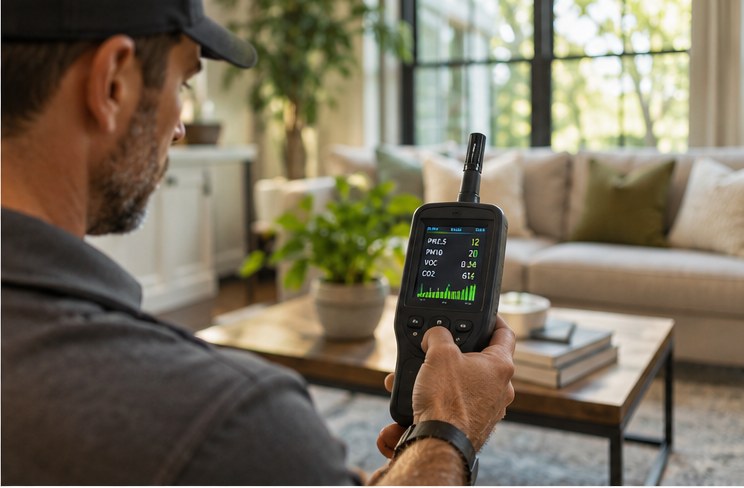

Fine airborne particles associated with dust, smoke, cooking and outdoor air infiltration. Particle readings can help identify patterns and potential sources.
Some paints, furnishings, cleaning products and building materials release VOCs. Broad VOC screening is not the same as identifying individual chemicals.
Indoor CO₂ trends can help assess occupancy-related ventilation conditions. CO₂ alone does not establish overall air quality.
CO is a hazardous combustion gas. Appropriate screening may be considered where equipment and scope permit; functioning CO alarms remain essential.
Measurements help assess comfort, condensation potential and moisture conditions that can contribute to indoor environmental concerns.
Specific gases require appropriate instruments or laboratory methods. Targeted testing may be recommended based on the concern and available methods.
Measurements are snapshots influenced by ventilation, weather, activities and instrument limitations. Any specific pollutant testing, sampling or laboratory analysis must be confirmed in the agreed scope. Mold assessment is not included unless separately offered under applicable Texas licensing requirements.

Tell us what you need. We’ll confirm the scope, availability and pricing before booking.
Schedule a Service →Testing methods and analytes depend on the service agreed upon. No single test can establish that a home is completely safe or diagnose a health condition. Mold-specific services are not implied unless separately offered by appropriately licensed personnel.